





















-
Vendor: Michu
Michu Real Wood Cat Tree For Large Cats - Ultimate Feline Playground for Aussie Cats
Michu Real Wood Cat Tree - Ultimate Feline Playground for Aussie Cats Bring a touch of the outdoors inside with the Michu Selected Real Wood Cat Tree. Unlike generic, carpet-covered towers, our best rated cat trees are handcrafted from sustainably sourced, real tree branches...- $299.00 AUD
$309.00 AUD- $299.00 AUD
- (-3%)
- Unit price
- per
-
Vendor: Michu
Michu Premium Real Wooden Cat Tree-Large
Michu Premium Real Wooden Cat Tree-Large For cat lovers seeking a blend of style and functionality, the Michu Wooden Cat Tree is the perfect solution. This elegantly crafted cat tower caters to your cat's natural climbing instincts while enhancing your home decor. It prevents...- $339.00 AUD
$359.00 AUD- $339.00 AUD
- (-6%)
- Unit price
- per
-
Vendor: Michu
Pre Order - MICHU Iris Cat Tower Deluxe 3-Tier Designer Flower Cat Tree
MICHU Iris Cat Tower Deluxe 3-Tier Designer Flower Cat Tree Discover the Iris Tall Cat Tower: Elegant and Fun for Your Feline Friends The Iris Tall Cat Tower combines real wood craftsmanship with a flower-inspired design, offering both elegance and adventure for your cat....- $399.00 AUD
$439.00 AUD- $399.00 AUD
- (-9%)
- Unit price
- per
-
Vendor: Michu
MICHU Ivy Cat Tower Deluxe 4-Tier Designer Tall Cat Tree
MICHU Ivy Cat Tower Deluxe 4-Tier Designer Tall Cat Tree Discover the Iris Tall Cat Tower: Elegant and Fun for Your Feline Friends The Iris MICHU Ivy Cat Tower combines real wood craftsmanship with a flower-inspired design, offering both elegance and adventure for your...- $469.00 AUD
$479.00 AUD- $469.00 AUD
- (-2%)
- Unit price
- per
-
Vendor: Michu
MICHU Fairy Cat Tower Deluxe 4-Tier Designer Flower Cat Tree for Large Cats
MICHU Fairy Cat Tower Deluxe 4-Tier Designer Flower Cat Tree Transform your home into a cat’s paradise with the MICHU Fairy Cat Tower Deluxe—a stunning 4-tier designer flower cat tree that combines beauty and functionality. This charming wooden cat tree features vibrant, flower-shaped platforms...- $439.00 AUD
$479.00 AUD- $439.00 AUD
- (-8%)
- Unit price
- per
-
Vendor: Lucky Seven
Flower Cat Tree with Scratching Posts and Cat Scratchers
Flower Cat Tree Scratcher with Scratching Posts Product Description Bring a touch of nature to your home with our Flower-Styled Cat Tree. Flower cat tree scratcher with 3 levels of jumping platforms, a cozy bottom house, a hammock, and a soft top nest, your...- $59.00 AUD
$69.00 AUD- $59.00 AUD
- (-14%)
- Unit price
- per
-
Vendor: Lucky Seven
Flower-Styled Cat Tree with Soft Nest & Scratching Posts
Flower-Styled Cat Tree with Soft Nest & Scratching Posts Product Description Bring a touch of nature to your home with our Flower-Styled Cat Tree. With 3 levels of jumping platforms, a cozy bottom house, a hammock, and a soft top nest, your feline friend...- $59.00 AUD
$65.00 AUD- $59.00 AUD
- (-9%)
- Unit price
- per
-
Vendor: Michu
Michu Cat Tree - Fluffy Blossom Real Wooden Cat Furniture - Extra Large for Bigger Cats Gray
Michu Cat Tree - Fluffy Blossom Real Wooden - Premium Quality & Stylish Cat Furniture - Extra Large Elevate Your Feline's Haven with Our Exquisite Real Selected Wooden Cat Tree For Large Cats Immerse your beloved furry companion in a world of elegance and comfort with...- $389.00 AUD
$389.00 AUD- $389.00 AUD
- (-0%)
- Unit price
- per
-
Gray
-
White
-
Vendor: Petroom
Cactus Cat Tree House – Multi-Level Condo with Cat Scratchers
Cactus Cat Tree House – multi-level condo scratching post Give your cat a chic multi-level cat tower for climbing, scratching, and lounging at your feet. Great for Australian pet owners in search of a great-looking, furniture accessible, durable cat tree that complements modern home...- $65.00 AUD
$75.00 AUD- $65.00 AUD
- (-13%)
- Unit price
- per
-
Vendor: Michu
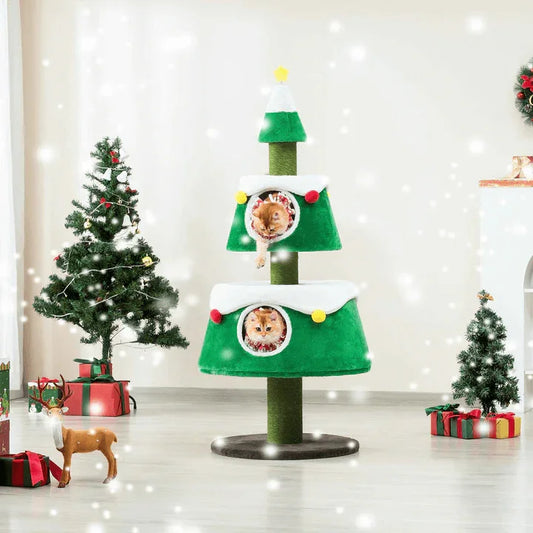
159cm Michu Christmas Cat Tree – The Best gift for Aussie Cats for Christmas
Michu Christmas Cat Tree – The Best gift for Aussie Cats for Christmas Make Aussie Cats unforgettable this Christmas season with your gift - Michu Christmas Cat Tree. This is the ideal Christmas gift for Aussie cat lovers. Made to resemble a Christmas tree, this...- $199.00 AUD
$269.00 AUD- $199.00 AUD
- (-26%)
- Unit price
- per
-
Vendor: Petroom
Galaxy Space Capsule Cat Tree with Scratching Posts - Vertical Scratch & Lounge Station
Galaxy Space Capsule Cat Tree with Scratching Posts Galaxy Space Capsule Cat Tree: Where Adventure Meets Cosmic ComfortLaunch your feline astronaut into a universe of fun with the Galaxy Space Capsule Cat Tree! This 30x30x36cm vertical playground combines interstellar style with purr-fect functionality,...- $35.07 AUD
$64.95 AUD- $35.07 AUD
- (-46%)
- Unit price
- per
-
Vendor: Petroom
Cat Tree With Scratching Post Galaxy Moon- Sturdy Galaxy Tower for Bigger Cats
Cat Tree With Scratching Post Galaxy Moon Nest & Space Capsule Galaxy Moon Nest & Space Capsule Cat Tree: A Cosmic Aussie Cat Tree for Curious Explorers. Take your cat on an out-of-this-world adventure with the Galaxy Moon Nest & Space Capsule Cat Tree...- $124.99 AUD
$164.99 AUD- $124.99 AUD
- (-24%)
- Unit price
- per
-
Vendor: Petroom
Galaxy Space Capsule Cat Scratching Posts
Galaxy Space Capsule Cat Scratching Posts: Claw Care Meets Cosmic Exploration Launch your cat’s scratching routine into orbit with the Galaxy Space Capsule Cat Scratching Posts! Designed to mimic futuristic rocket boosters, these space-themed posts blend rugged sisal texture with celestial style, satisfying your cat’s...- $29.95 AUD
$54.95 AUD- $29.95 AUD
- (-45%)
- Unit price
- per
-
Vendor: Petroom
Galaxy Time Tunnel Cat Scratching Tower
Galaxy Time Tunnel Cat Scratching Tower Meet your feline friend on an interstellar trip with the Galaxy Time Tunnel Cat Tree, an intelligent, fun-filled Australian cat scratching tower. A cat scratching tower with multiple platforms, a comfy built-in cat bed, and scratch surfaces for cat...- $125.00 AUD
$199.00 AUD- $125.00 AUD
- (-37%)
- Unit price
- per
-
Vendor: Petroom
Michu Luna Multi-Layer Solid Wood Cat Nest Tree
Michu Luna Multi-Layer Solid Wood Cat Nest Tree Elevate your feline's lifestyle with the Michu Luna Multi-Layer Solid Wood Cat Nest Tree. Combining premium materials with a sleek, home-friendly design, this wooden cat tree is the perfect addition for both your cat's comfort and...- $469.00 AUD
$499.00 AUD- $469.00 AUD
- (-6%)
- Unit price
- per
-
Vendor: Petroom
Futuristic Cat Tree Multi-Level Cat Tower Galaxy UFO Moon Style
Futuristic Cat Tree Multi-Level Cat Tower Galaxy UFO Moon Style Inspire the home with Galaxy UFO Moon Cat Tree — a fantastic and classic piece of Australian cat tower design. For a visually appealing cat tower and cat scratching tower, be sure to opt...- $99.49 AUD
$199.00 AUD- $99.49 AUD
- (-50%)
- Unit price
- per
-
Vendor: Petroom
Coconut Cat Scratching Tower with Posts & Toys
Coconut Cat Tree Tower Scratching Post Toys Premium cat furniture for Aussie Homes The Coconut Cat Tree Tower Scratching Post Toys is designed as an all-in-one cat climbing tower for homes that need play, scratching, resting and hiding space in one compact piece. Built...- $55.00 AUD
$69.00 AUD- $55.00 AUD
- (-20%)
- Unit price
- per
-
Vendor: Michu
Michu Verde Solid Wood Base Cat Tree for Large Cats
Michu Verde Solid Wooded Base Cat Tree Unique Design That Fits Australian Homes The Michu Verde Cat Tree isn’t just another pet accessory – it’s a stylish addition to your living space. Its sleek, modern design blends seamlessly with contemporary Australian interiors, making it...- $379.00 AUD
$439.00 AUD- $379.00 AUD
- (-14%)
- Unit price
- per
-
Vendor: Lucky Seven
Three Tier Coffee Cup Cat Scratching Tower – Sisal Scratching Posts, Compact Design
Three Tier Coffee Cup Cat Tree Cat Scratcher– Compact Multi-Level Cat Tower with Sisal Scratching Posts The Coffee Cup Cat Tower is a multi-level cat tower that helps your pet get excited, go to bed, and lay some groundwork. Ideal for small spaces but...- $169.00 AUD
$189.00 AUD- $169.00 AUD
- (-11%)
- Unit price
- per
-
Vendor: Lucky Seven
Galaxy Echo Super cat tree for large cats - Scratching Post (Height 170cm)
Galaxy Echo Super Large Cat Tree With Scratching Post (Height 170cm) The Sisal Scratching Post has both a 5-storey and a Sun Roof Top. Raise your cat’s indoor playground to a new level with the Premium Cloud Cat Tower, a high-level and fun cat...- $189.00 AUD
- $189.00 AUD
- (-0%)
- Unit price
- per
-
Vendor: Petroom
Ona’s Cottage Multi-Tier Cat Tree with Cat Scratching Posts - Tall Tower for Bigger Cats
Ona’s Cottage Multi-Tier Cat Tree Premium Multi-Level Cat Tower with Cat Scratching Posts Introducing the Ona’s Cottage Premium Multi-Level Cat Tower with Cat Scratching Posts – a tall, multi-level playground for your furry friend.Pet Room recommends this taller cottage-style tower for households that want...- $175.00 AUD
$199.00 AUD- $175.00 AUD
- (-12%)
- Unit price
- per
-
Vendor: PETROOM
Lucky Money Tree Cat Scratching Post – Durable Sisal Scratching Pole
Lucky Money Tree Cat Scratching Post Provide your kitty a fun and decorative place to scratch – all done with style – with this easy-to-use Lucky Money Tree Cat Scratching Post! Considered an alternative cat tower, this small, durable cat scratching tower keeps your...- $49.95 AUD
$84.99 AUD- $49.95 AUD
- (-41%)
- Unit price
- per
-
Vendor: Petroom
Galaxy Space Walk Cat Bed Cat Scratchers
Galaxy Space Walk Cat Bed & Scratcher: A Cosmic Oasis for Play and Rest Elevate your cat’s daily routine to stellar heights with the Galaxy Space Walk Cat Bed & Scratcher! This innovative dual-purpose design merges a snug celestial bed with textured sisal scratching surfaces,...- $54.95 AUD
$74.95 AUD- $54.95 AUD
- (-27%)
- Unit price
- per
-
Vendor: Makesure
Makesure Multifunctional Sisal Cat Scratchers Beige
Makesure Multifunctional Sisal Cat Scratcher Designed for cats that need a durable scratching surface and a flexible furniture-style piece, the Makesure Multifunctional Sisal Cat Scratcher works as both a practical scratcher and a home-friendly lounging accessory. Made with natural sisal and stainless steel, it...- $89.00 AUD
$99.00 AUD- $89.00 AUD
- (-10%)
- Unit price
- per
-
Avocado Green
-
Beige
-
Basil Green
-
Vendor: Makesure
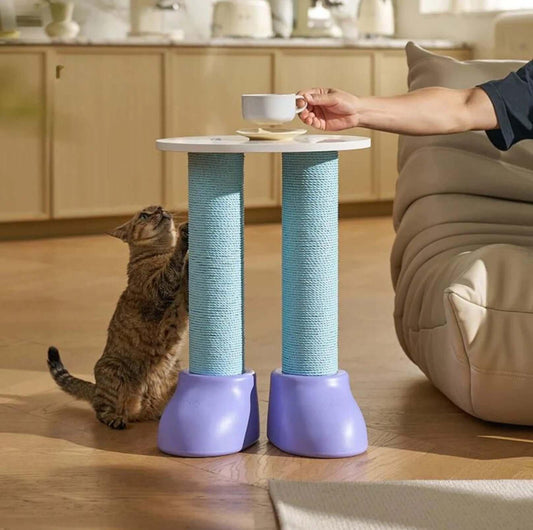
MAKESURE 3-in-1 Cat Scratcher Bed and Side Table Purple
MAKESURE 3-in-1 Cat Scratcher, Bed, and Side Table - Stylish Feline Furniture Multi-Use Design: Serves as a cat scratcher, bed, and stylish side table. Unique Boot Shape: A conversation-starting centerpiece that's also a cozy hideaway for your cat. Space-Saving Elegance: Blends seamlessly with your...- from $116.00 AUD
- from $116.00 AUD
- (-0%)
- Unit price
- per
-
Purple
-
Green
-
Vendor: PETROOM
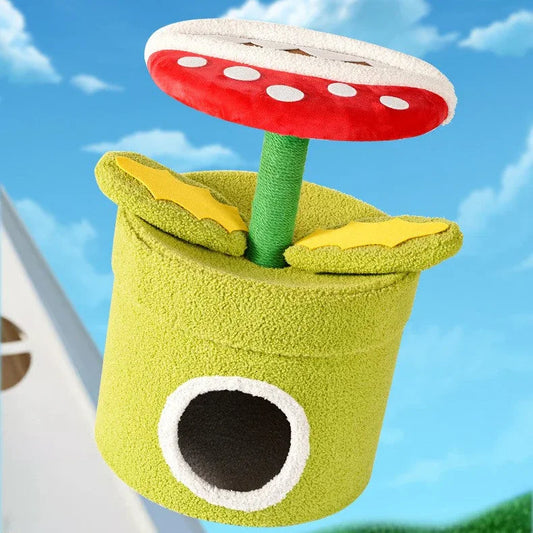
Piranha Plant Cat Tree - Cozy Cat House & Tower - Cat tree for large cats
Piranha Plant Cat Tower with Cozy Condo Scratching Post A daring statement piece that features a "Man-Eating Flower" motif with an extreme design of high performance cat tree and cat tower. Why This Is One Of The Best-rated Cat Trees. This cat tree functions...- $58.69 AUD
$69.95 AUD- $58.69 AUD
- (-16%)
- Unit price
- per
-
Vendor: Petshy
Petshy Cat Scratcher Board XL Green
Petshy Cat Scratcher Board - XL Size Petshy Cat Scratcher, XL Cat Scratching Pad, Corrugated Paper Cat Bed, Large Cat Grinding Claw Toy, Durable Cat Scratcher, High-Density Cardboard, Petshy Pet Supplies. 【Product Highlights】 Extra Large (XL) Design: Specifically engineered for large cat breeds or...- $29.95 AUD
$36.99 AUD- $29.95 AUD
- (-19%)
- Unit price
- per
-
Green
-
Blue
-
Vendor: Michu
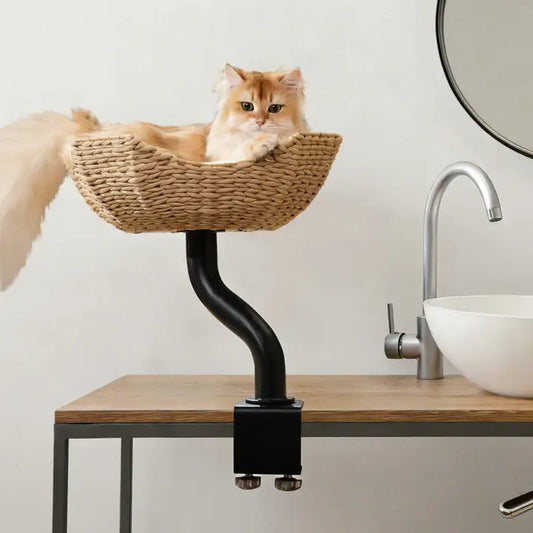
Michu DeskMate Desk-Mounted Cat Tree Perfect For WFH Black
Michu DeskMate Desk-Mounted Cat Tree Perfect For WFH Keep Your Cat Close & Your Desktop Clear. Decorate your home office with the Michu DeskMate Sustainable Desk-Mounted Cat Tree - a sleek, space-saving feline perch that fits snugly in the workspace. Ideal for small apartment...- $139.98 AUD
$169.00 AUD- $139.98 AUD
- (-17%)
- Unit price
- per
-
Black
-
White


Vendor:
Inaba
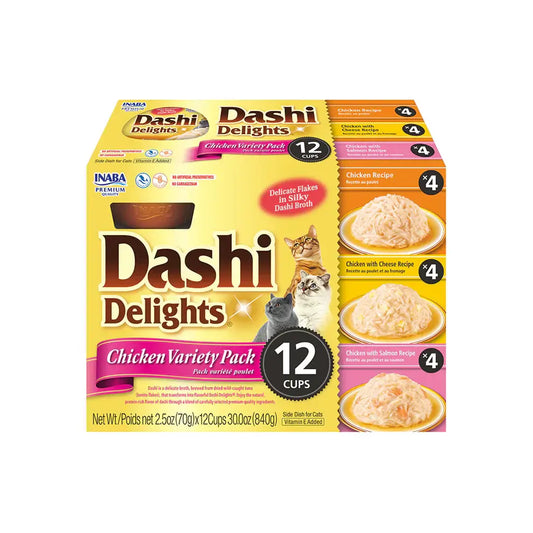
INABA Dashi Delights Chicken Variety Pack Cat Treats 12 Cups
INABA Dashi Delights Chicken Variety Pack Cat Treats 12 Cups Description INABA Dashi Delights are premium single-serve cat food toppers crafted from tender shreds of farm-raised chicken, bathed in a warm, savoury dashi broth made from wild-caught bonito flakes — the same traditional Japanese...
- $31.95 AUD
$44.95 AUD- $31.95 AUD
- (-29%)
- Unit price
- per
Vendor:
Inaba
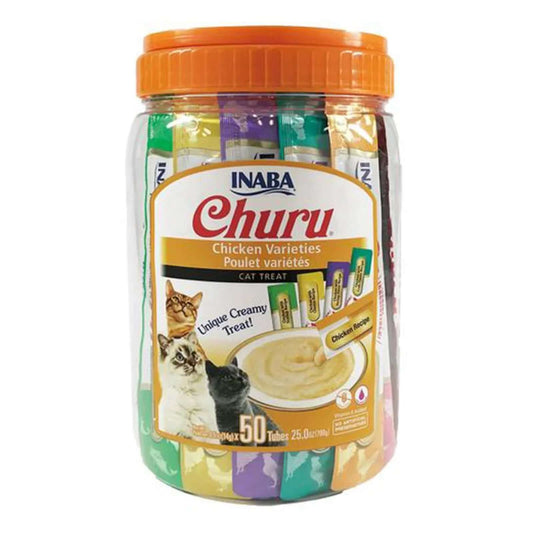
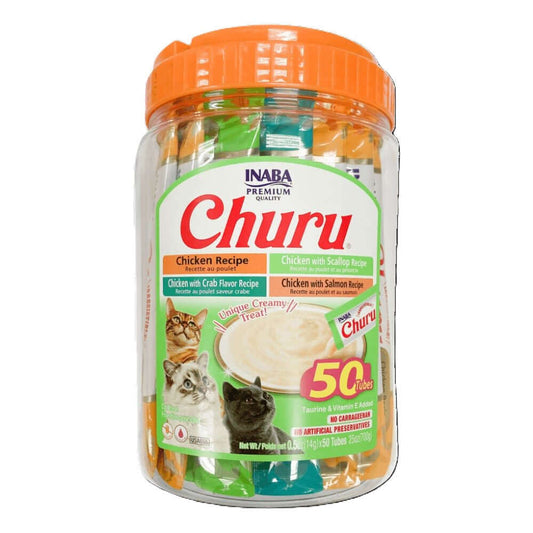
INABA Churu Puree Cat Treats - Chicken Varieties Bulk Pack 50 x 14g
INABA Churu Puree Cat Treats - Chicken Varieties Bulk Pack [Product Overview] Give your cat the ultimate poultry feast with the INABA Churu Chicken Variety Box. This bulk 50-pack tub features five mouth-watering, chicken-based flavors, providing a protein-rich and varied snacking experience for your...
- $38.98 AUD
$58.99 AUD- $38.98 AUD
- (-34%)
- Unit price
- per
Vendor:
Inaba
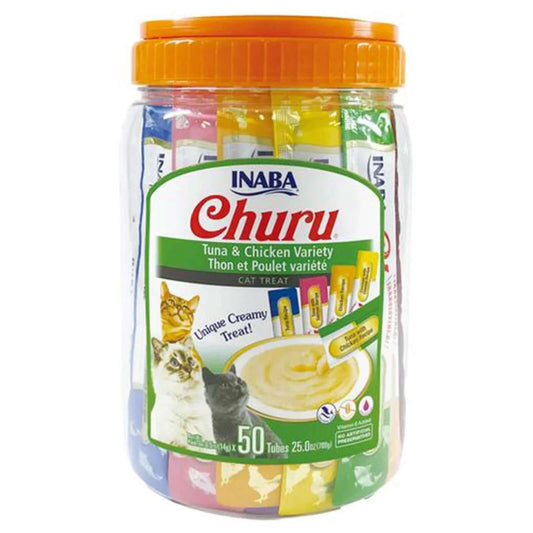
INABA Churu Puree Cat Treats - Tuna & Chicken Varieties Bulk Pack 50 x 14g
INABA Churu Puree Cat Treats - Tuna & Chicken Varieties Bulk Pack Can't decide between seafood or poultry? The INABA Churu Tuna & Chicken Variety Box offers the best of both worlds. This bulk 50-pack tub features five surf-and-turf inspired recipes, combining high-quality wild-caught...
- $38.98 AUD
$58.99 AUD- $38.98 AUD
- (-34%)
- Unit price
- per
Vendor:
Inaba
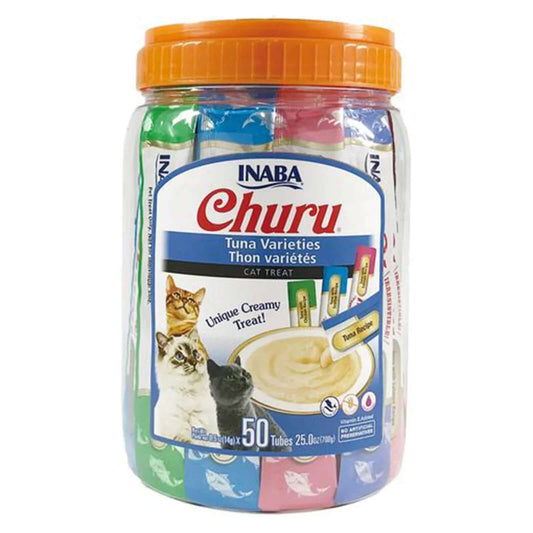
INABA Churu Puree Cat Treats - Tuna Varieties Bulk Pack 50 x 14g
INABA Churu Puree Cat Treats - Tuna Varieties Bulk Pack [Product Overview] Treat your cat to the world’s most popular lickable treat with the INABA Churu Tuna Variety Box. This bulk 50-pack tub features four delicious, tuna-based flavors designed to entice even the fussiest...
- $38.98 AUD
$58.99 AUD- $38.98 AUD
- (-34%)
- Unit price
- per
Vendor:
Inaba
INABA Churu Puree Cat Treats Chicken & Seafood Variety 50 x 14g
INABA Churu Puree Cat Treats Chicken & Seafood Variety (50 x 14g Tubes) Treat your cat to the delicious taste of INABA Churu Puree Cat Treats, a smooth and delicious, lickable snack incorporating real chicken and seafood from INABA Churu Puree, to your cat!...
- $38.98 AUD
$58.99 AUD- $38.98 AUD
- (-34%)
- Unit price
- per
Vendor:
Inaba
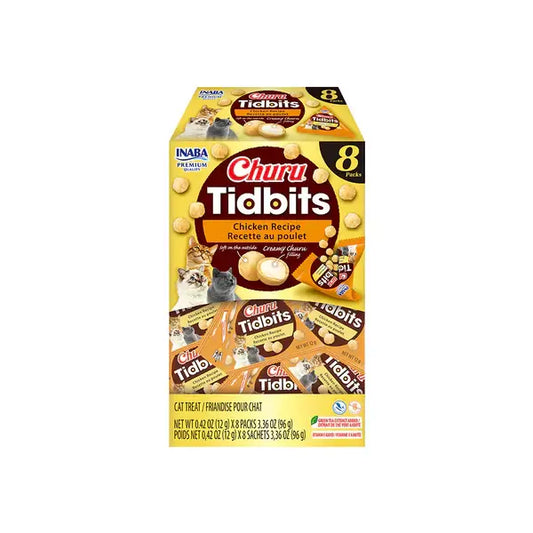
INABA Churu Tidbits Chicken Recipe 96g (8 x 12g Packs)
INABA Cat Churu Tidbits Chicken Recipe 12g x 8 Packs (96g) Treat your cat to the ultimate snack experience with INABA Cat Churu Tidbits Chicken Recipe — the grain-free cat treat Australia's most demanding felines can't resist. Designed by INABA, one of the world's most...
- $13.59 AUD
$15.99 AUD- $13.59 AUD
- (-15%)
- Unit price
- per
Vendor:
Inaba
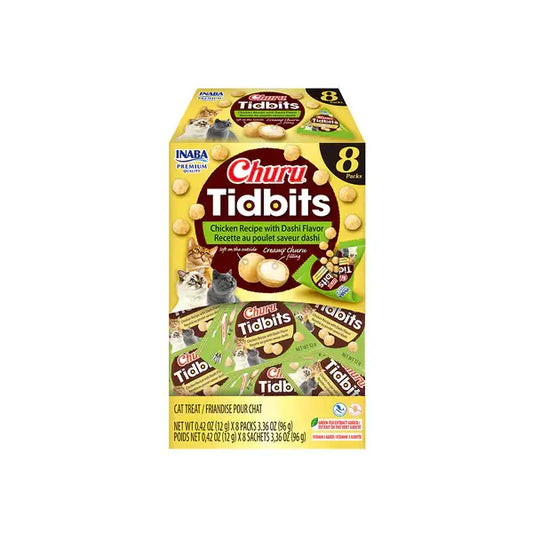
INABA Churu Tidbits Chicken With Dashi Flavor (8 x 12g Packs)
INABA Churu Tidbits Chicken With Dashi Flavor (8 x 12g Packs) Cater your cat to the grandest snack offering with INABA Cat Churu Tidbits Chicken With Dashi Flavor— the grain-free cat treat Australia’s most demanding cats cannot resist. With INABA, one of the world’s...
- $13.59 AUD
$15.99 AUD- $13.59 AUD
- (-15%)
- Unit price
- per
Vendor:
Inaba
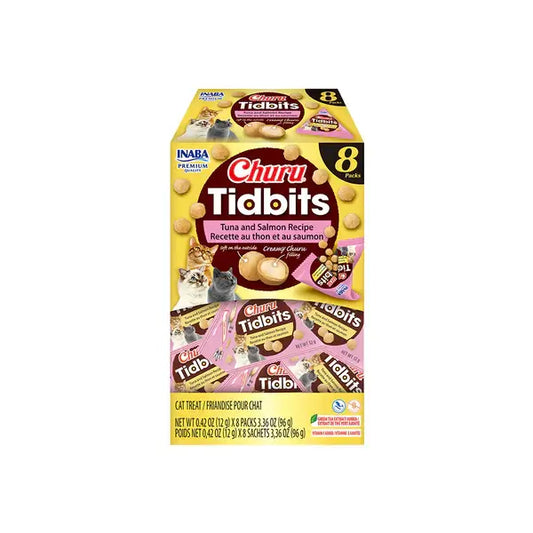
INABA Churu Tidbits Tuna And Salmon Flavor (8 x 12g Packs)
INABA Churu Tidbits Tuna And Salmon Flavor (8 x 12g Packs) Soft and indulgent treats filled with creamy Churu in every bite. INABA products contain yummy, high-quality ingredients from farm-raised chicken and wild-caught tuna. Convenient, portion-controlled packs for on-the-go delivery. If your cat is drawn...
- $13.59 AUD
$15.99 AUD- $13.59 AUD
- (-15%)
- Unit price
- per
Vendor:
Meaty Treaty
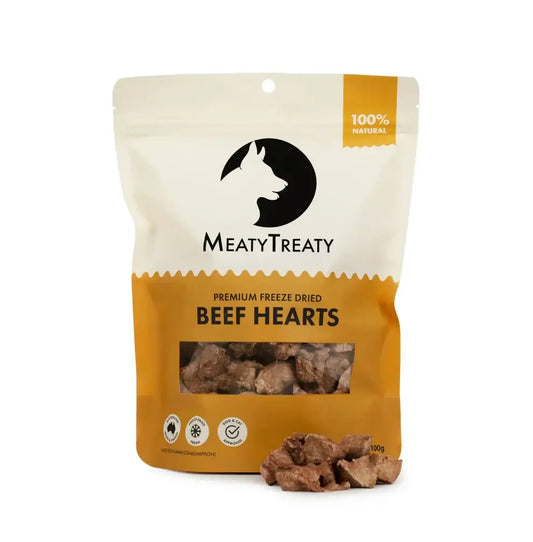
Meaty Treaty Freeze Dried Beef Hearts Australian Treats for Dogs & Cats 100g
Meaty Treaty Freeze Dried Beef Hearts Healthy Dogs & Cats Treats 100g We give your pet the ultimate reward with savory Meaty Treat Beef Hearts. The ultra-pure meats of premium raw food offer a whole range of energy that you’ll find anywhere – especially...
- $14.99 AUD
$19.99 AUD- $14.99 AUD
- (-25%)
- Unit price
- per
Vendor:
Meaty Treaty
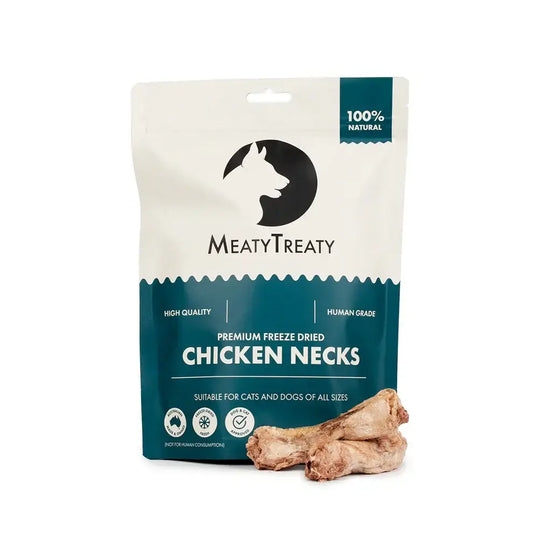
Meaty Treaty Freeze Dried Chicken Neck Healthy Australia Dogs & Cats Treats 100g
Meaty Treaty Freeze Dried Chicken Neck Healthy Dogs & Cats Treats 100g Looking for a healthy, single-protein pet treat? We hope that those tails will continue to wag and teeth sparkle. Raw Chicken Necks are a nutrient-dense snack intended for joint mobility and dental...
- $12.79 AUD
$15.99 AUD- $12.79 AUD
- (-20%)
- Unit price
- per
Vendor:
Meaty Treaty
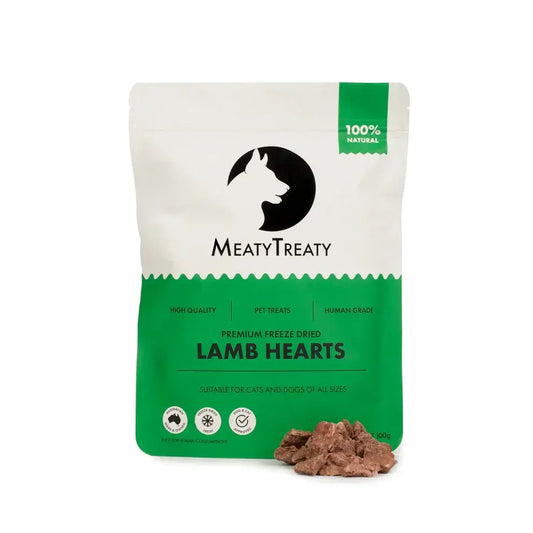
Meaty Treaty Freeze Dried Lamb Hearts for Dogs & Cats – Cat Treats Australia 100g
Meaty Treaty Freeze Dried Lamb Hearts Healthy Dogs & Cats Treats 100g Looking for a healthy, single-protein pet treat? Meaty Treaty Beef Hearts are a powerhouse of nutrition. Our raw Lamb Hearts provide a natural boost of taurine, iron, and zinc—the building blocks for...
- $13.59 AUD
$15.99 AUD- $13.59 AUD
- (-15%)
- Unit price
- per
Vendor:
Meaty Treaty
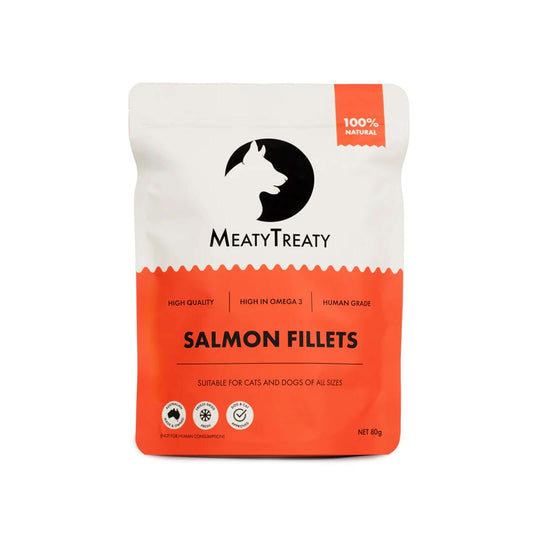
Salmon Fillet Freeze Dried Treats For Cats & Dogs 80g
Salmon Fillet Freeze Dried Treats For Cats & Dogs 80g Be Sure To Buy 100% Human-Grade Fish With Meaty Treaty Salmon Fillets! And instead of mass-produced biscuits containing grains and fillers, our fillets have been vacuum freeze-dried to maintain the nutritional integrity, natural oils,...
- $15.99 AUD
$18.95 AUD- $15.99 AUD
- (-16%)
- Unit price
- per
Vendor:
FREEZY PAWS
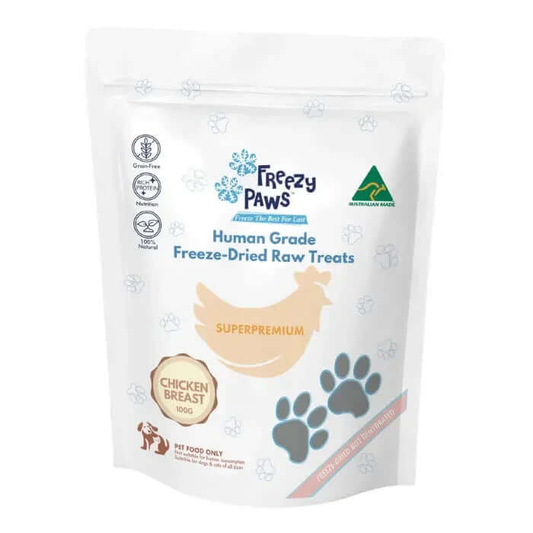
Freezy Paws Freeze Dried Cat Treats Chicken Breast for Dogs & Cats 100g
Freezy Paws Freeze-Dried Chicken Breast Dog & Cat Treats 100g Let’s be real—most pet treats are mystery bags of fillers. If you’re tired of squinting at ingredient labels, Freezy Paws Freeze-Dried Chicken Breast is your "reset button." It’s literally just chicken. No grains, no...
- $17.99 AUD
$21.99 AUD- $17.99 AUD
- (-18%)
- Unit price
- per
Vendor:
FREEZY PAWS
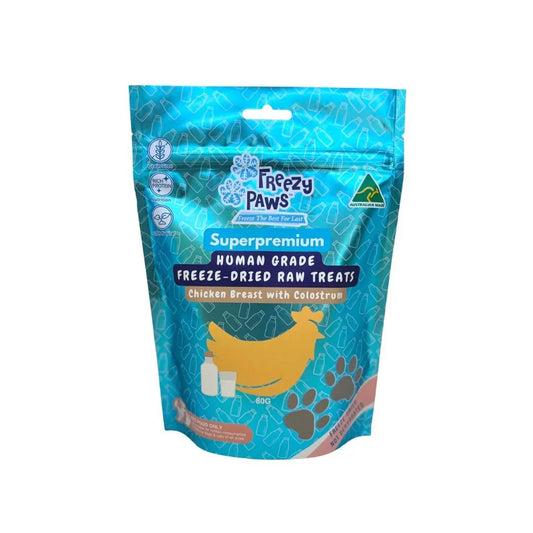
Freezy Paws Freeze Dried Cat Treats Chicken Breast with Colostrum 80g
Freezy Paws Chicken Breast with Colostrum Treats 80g Let’s talk about the "Secret Sauce"—Colostrum. If you’ve got a new puppy or a kitten with a sensitive system, you know the struggle of finding treats that don’t cause a tummy upset. For Petroom, this is...
- $18.99 AUD
$21.99 AUD- $18.99 AUD
- (-14%)
- Unit price
- per
Vendor:
PETROOM
Freezy Paws Freeze Dried Human Grade Chicken Breast Catnip Cat Treats 80g
Freezy Paws Freeze Dried Human Grade Chicken Breast Catnip Cat Treats 80g Freezy Paws, Freeze Dried Cat Treats, Chicken Breast with Catnip, Human Grade Cat Snacks, Catnip Infused Treats, Grain-Free Cat Food, High Protein Kitten Treats, 80g Cat Treats. 【Product Highlights】 Dynamic Duo (Chicken...
- $17.99 AUD
$21.99 AUD- $17.99 AUD
- (-18%)
- Unit price
- per
Vendor:
ZIWI
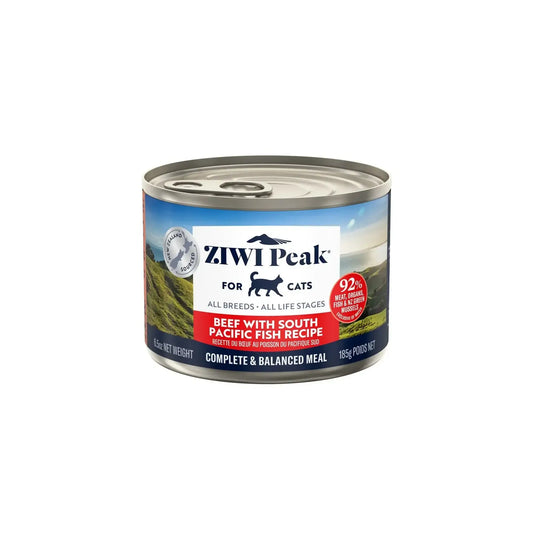
Ziwi Peak Beef With South Pacific Fish Cat Wet Food
Ziwi Peak Beef With South Pacific Fish Cat Wet Food Give your pet the nutrition nature intended with Ziwi Peak Beef and Fish Cat Food, a premium recipe crafted in New Zealand. Each can provides a high-moisture meal that mirrors an ancestral diet. This...
- from $57.95 AUD
$71.99 AUD- from $57.95 AUD
- (-20%)
- Unit price
- per
Vendor:
ZIWI
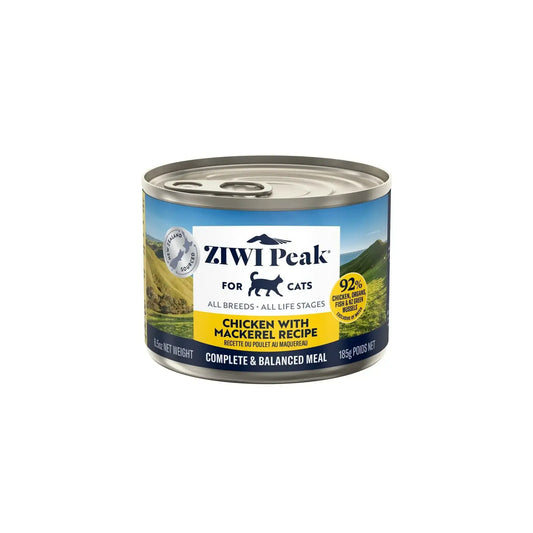
Ziwi Peak Chicken With Mackerel Fish Cat Wet Food
Ziwi Peak Chicken With Mackerel Fish Cat Wet Food Pure protein. Zero compromise. ZIWI Peak Chicken with Mackerel Wet Cat Food provides the nutrition your kitty is hard-wired to want and crave — a rich, moisture-dense pâté prepared with real, ethically sourced ingredients and...
- from $57.95 AUD
$71.99 AUD- from $57.95 AUD
- (-20%)
- Unit price
- per
Vendor:
ZIWI
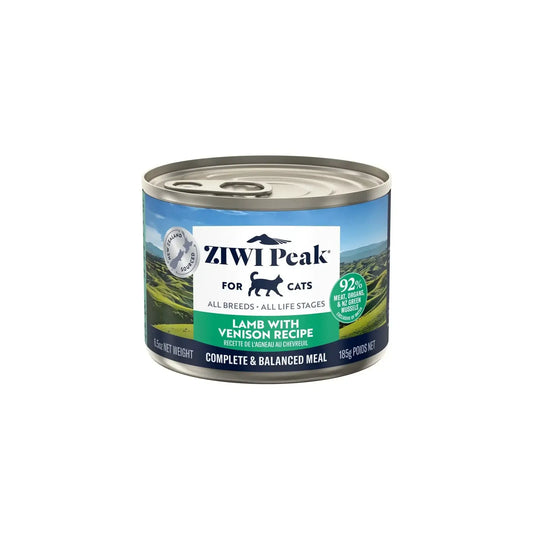
Ziwi Peak Lamb with Venison Cat Wet Food
Ziwi Peak Lamb with Venison Cat Wet Food Treat your pet to Ziwi Peak Lamb Venison Cat Food, a moisture-dense pâté featuring two of New Zealand's finest free-range red meats. This premium cat recipe is ethically sourced and free from fillers, binders, or unnecessary...
- from $57.95 AUD
$71.99 AUD- from $57.95 AUD
- (-20%)
- Unit price
- per
Vendor:
PETROOM
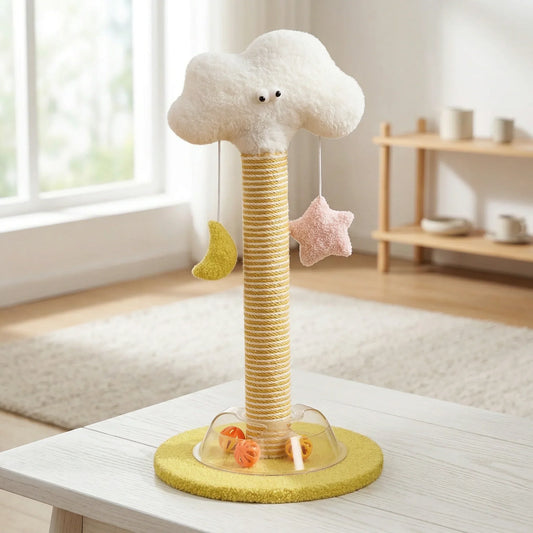
Articulate Cartoon Cloud Scratching Post with Ball Track Base – Vertical cat scratchers Play Station
Articulate Cartoon Cloud Scratching Post with Ball Track Base 2-in-1 Turntable & Vertical Cat Scratcher Introduce a bit of magic into your house with the Cloud Cat Scratcher. And this fun cat scratcher is not just one tool for claw care — it’s all...
- $39.97 AUD
$45.95 AUD- $39.97 AUD
- (-13%)
- Unit price
- per
Vendor:
PETROOM
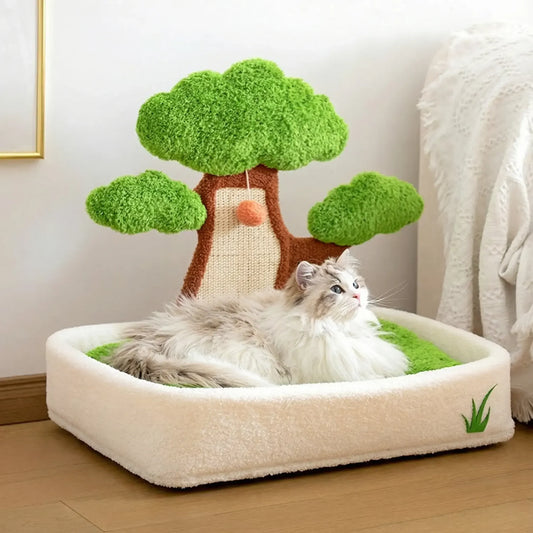
Rileycat Pine Bonsai Pet Bed – Creative cat tree for large cats XL
Rileycat Pine Bonsai: The Perfect Luxury Cat Bed & Zen Resort XL Bring up the comfort of your home and your pet with the Rileycat Pine Bonsai, a masterpiece of Japanese-style pet furniture. Just a home bed for kitty comfort, this is a high-end...
- $69.95 AUD
$79.95 AUD- $69.95 AUD
- (-13%)
- Unit price
- per














Recently Viewed Products
Cat Tree for Large Cats FAQ
How big should a cat tree be for a large cat?
For a large cat, look for platforms at least 35–40 cm across — wide enough that your cat can actually lie down and turn around, not just balance on. Standard cat trees usually run 25–30 cm platforms, which a Maine Coon or Ragdoll will hang off the edges of.
Height matters, but stability matters more. A 1.5 m tree with a wide, heavy base beats a 1.8 m one that wobbles every time your cat jumps on. Look for a base that's both wide and weighted, with posts thick enough not to flex.
If you've got more than one big cat, size up again — multiple wide platforms at different heights let two cats share without competing for the top spot.
Why does a large cat need a cat tree?
Climbing and perching aren't optional extras for cats — they're core behaviour. Cats use height to feel safe, to survey their territory, and to get away from other pets or household activity when they want to.
VCA's enrichment guidance for indoor cats lists vertical space as a basic environmental need, not a luxury. For a large cat especially, a sturdy tree is often the only piece of furniture in the house actually built to take their weight at height — windowsills and shelves usually aren't.
Without a proper option, big cats tend to claim the tops of wardrobes and fridges instead. A cat tree just gives them a safer, purpose-built version of what they're going to do anyway.
Will a regular cat tree hold a Maine Coon or Ragdoll?
Often, no. Most budget cat trees are built and weight-rated for an average 3–4 kg cat. A Maine Coon can hit 7–9 kg, and that cat launching onto a top perch is a different physics problem entirely.
For big breeds, look specifically for trees described as "large" or "XL", with solid posts (not thin cardboard tubes), a base plate that's wide and heavy, and platform fixings that are screwed rather than stapled.
It's worth paying more here. A tree that wobbles or tips once will put a cat off using it for good — and then it's just expensive floor space.
Where should I put a cat tree for a large cat?
Somewhere with a view and some household activity nearby — next to a window is ideal. Cats want to watch what's going on, not be tucked away in a spare room.
Keep it separate from their other resources, though. Cats prefer their climbing and resting space away from where they eat and where they toilet — so don't crowd the cat tree in next to the food bowls or the cat litter trays. Each zone working independently is part of what keeps a cat relaxed at home.
In a multi-cat home, more than one tree — or one big tree with several perches — spread across different rooms works better than a single tower everyone has to share.
How do I get my large cat to use the cat tree?
Position is most of the battle — put the tree where your cat already likes to be, not where it looks tidiest. If they nap on the couch by the window, the tree goes by the window.
Then make it the better option: a bit of catnip rubbed on the posts, a favourite blanket on the top perch, or a feather toy played around the levels all help build the association. Reward them when they use it.
Give it time. Some cats take to a new tree in an afternoon; others circle it suspiciously for a week. Don't force them onto it — that usually backfires.
What else does a large cat need at home besides a cat tree?
A cat tree covers climbing and resting, but a big cat's setup needs a couple of other things sized correctly too.
Litter is the one most owners get wrong — standard trays are built for average cats, and a large breed needs more room to turn around without hanging over the edge. An extra large cat litter box gives them space to use it comfortably, which matters more than people realise for avoiding accidents outside the tray.
Beyond that: wide, heavy food and water bowls they're not crouching over, and resting spots at a few different heights around the house — not just on the tree.
Are cat trees enough exercise for an indoor large cat?
A cat tree helps, but it's not the whole answer. It encourages daily climbing and movement, which is genuinely useful — but most cats won't work hard enough on a tree alone to stay in shape.
AAHA's feline fitness guidance points to a combination: the tree and other enrichment, plus two or three short structured play sessions a day. The tree gives them somewhere to be active; interactive play is what actually gets the heart rate up.
Exercise only does half the job, though — portion control matters just as much. Pairing daily activity with a measured amount of a quality cat dry food is how you keep a large indoor cat from tipping into overweight, which bigger breeds are especially prone to.


- Choosing a selection results in a full page refresh.


